Kitchen & Bath · Roundup
Best Tension Shower Curtain Rods
This is the one tension rod that gets wet, gets pulled, and gets used every day. It is also the one category where the makers stop printing numbers.
By Scooter M. · Published · How we pick
Disclosure · We earn a commission on purchases made through the Amazon links on this page, at no extra cost to you. These picks come from published specifications, not from hands-on use. How this site is funded.
Quick picks
Ranked on published specification, not on hands-on use. Tap a row for the full write-up.
| # | Product | Best for | Score | Price |
|---|---|---|---|---|
| 1 | 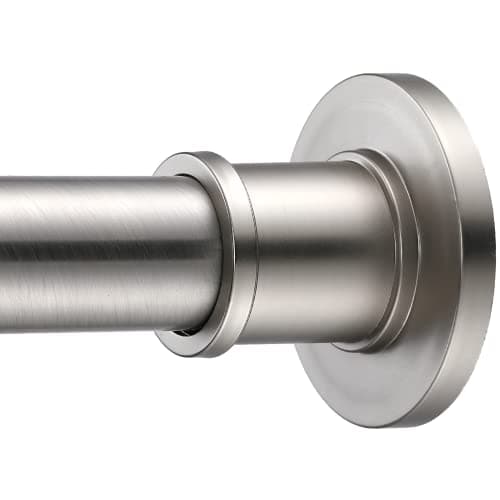 BRIOFOX Industrial Shower Curtain Rod, 43-72 in Stainless Steel The only published load, 30 lb | Anyone who wants a number rather than an adjective | 9.2out of 10 | $30.99 · View on Amazon #ad Price as of October 3, 2026. How we are funded |
| 2 | 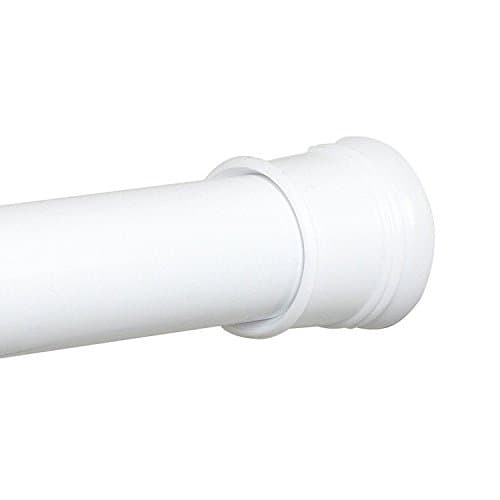 Zenna Home Tension Shower Curtain Rod, 44-72 in (505W) Thickest rod, 1.38 in | A standard tub alcove, from a name you can look up | 8.8out of 10 | $25.65 · View on Amazon #ad Price as of October 3, 2026. How we are funded |
| 3 | 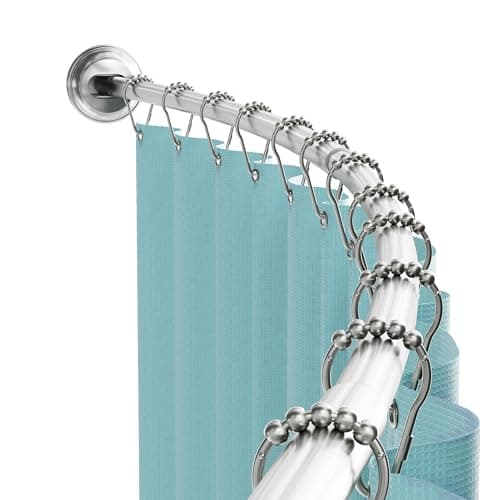 Zenna Home Curved Shower Curtain Rod, 50-72 in (35633BNP) Adds 6.5 in of elbow room | A cramped tub where the liner sticks to you | 8.6out of 10 | $49.99 · View on Amazon #ad Price as of October 3, 2026. How we are funded |
| 4 | 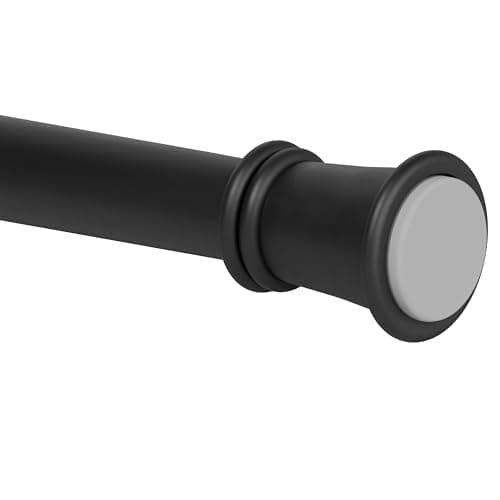 Zenna Home Tension Shower Curtain Rod, 26-76 in Matte Black (E76B7BK) Widest range, 26-76 in | An awkward alcove, or a rod you want to take to the next flat | 8.5out of 10 | |
| 5 | 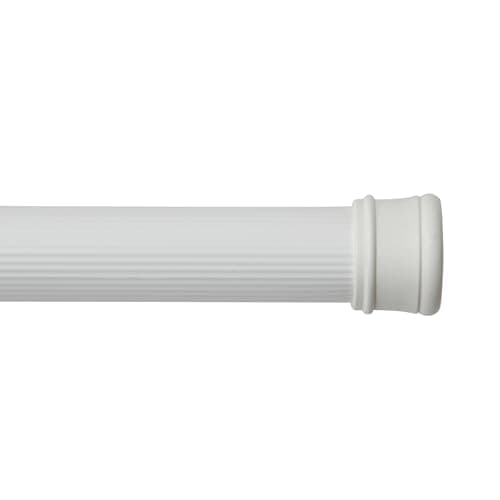 Kenney Twist & Fit Spring Tension Shower Curtain Rod, 42-72 in (KN609L/1) Non-slip and non-scratch ends | A tiled alcove where you are worried about marking the surface | 8.4out of 10 | |
| 6 | 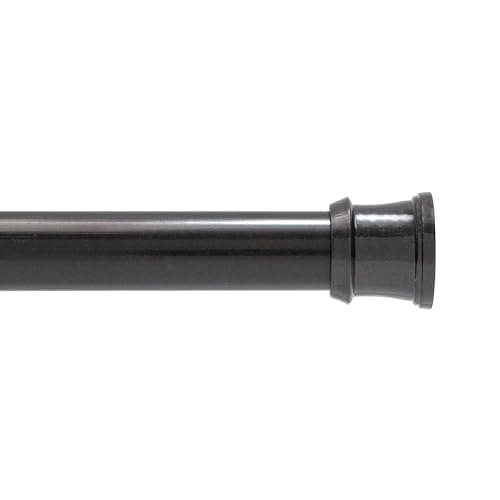 Kenney Twist & Fit Camlock Tension Shower Curtain Rod, 42-72 in (KN609C/5) Cheapest, camlock mechanism | The lowest price with a traceable model number | 8.2out of 10 | $12.00 · View on Amazon #ad Price as of October 3, 2026. How we are funded |
A tension shower rod is the most-used no-drill product in a rented home. It goes up in a bathroom where drilling tile is the one job no renter should ever take on, it carries a curtain and a liner that are wet for part of every day, and it gets pulled sideways twice a day by someone in a hurry.
So you would expect this to be the tension-rod category with the most published engineering. It is the one with the least.
Of the six rods on this page, exactly one publishes a load figure. BRIOFOX states 30 lb. Zenna Home and Kenney -- the two brands that between them define this category in most American bathrooms -- publish spans, diameters, finishes and mechanisms, and where the capacity should be they print phrases like "strong and reliable hold" and "supports all standard shower curtains and liners". Compare that with the window rods in our tension rod weight limits table, where published figures run from 2.33 lb to 22 lb and you can actually plan.
The load is the liner, and it changes weight
The reason the missing number matters is that a shower rod does not carry a constant load. A fabric curtain and a vinyl liner are modest dry. Soaked, they are heavier, and the weight sits at the bottom edge where it has the most leverage on a rod held up by nothing but friction at two points.
Then somebody grabs the curtain. That is the moment tension rods fail, and it is a shock load rather than a static one -- which is exactly the case no published figure on any tension rod describes, in this category or any other.
The practical consequence: do not treat a shower rod as spare hanging capacity. We make the same point in best no-drill shower caddies, where one rod we cover publishes 7.5 lb total -- a curtain, a liner and very little else. Hanging a loaded caddy from the curtain rod is how both end up in the bath.
| Rod | Span | Published load | Material and grip |
|---|---|---|---|
| BRIOFOX Industrial | 43-72 in | Max load 30 lbs | 304 stainless, 1 in dia, 2.35 in non-slip rubber plate |
| Zenna Home 505W | 44-72 in | None published | Rust-resistant steel, 1.38 in dia, non-marring end caps |
| Zenna Home 35633BNP curved | 50-72 in | None published | Aluminum, rustproof for life, 1 in dia, non-slip pads |
| Zenna Home E76B7BK | 26-76 in | None published | Rust-resistant steel, 1.25 in dia, matte black |
| Kenney KN609L/1 | 42-72 in | None published | Chip and rust resistant steel, non-slip and non-scratch caps |
| Kenney KN609C/5 | 42-72 in | None published | Rust-resistant steel, black, non-slip and non-scratch caps |
How these are ranked
Published figures first, which in this category means one rod starts a long way ahead. Then how the ends grip, because a tension rod is only ever as good as the friction at two points -- and the end plate is the part makers usually describe with an adjective. Then corrosion resistance, since this is a permanently wet room and "rust-resistant" and "rustproof" are not the same claim. Then span range, then price. The full method is here. We have not tested any of these; every figure is somebody else's published number.
Three mechanisms, and they fail differently
The rods here use three different ways of staying up, and the listings treat this as a feature name rather than a decision. It is a decision.
Spring tension. An internal spring pushes the two halves apart. Simplest design, fewest parts, and the one you cannot adjust after fitting -- the spring applies whatever force it applies. Kenney's KN609L is this type.
Camlock. You set the length, then throw a lock to fix it. The advantage is that the rod holds a chosen length rather than pressing outward forever; the cost is a moving mechanism living in a wet room. Kenney's KN609C is this type.
Twist to tension. Rotating the rod drives the two halves apart, so you can keep tightening until it is genuinely firm. Zenna calls its version TwistTight; the curved rod goes further and uses an included hex wrench. This is the type to want if your walls are slightly out of square, which in an older rented bathroom they usually are.
Measuring the alcove
Measure wall to wall at the height the rod will sit, not at the rim of the bath. Alcoves are rarely parallel, and the measurement that matters is the one where the ends will actually press.
Then buy a rod whose range brackets your measurement rather than ending at it. A rod at the very top of its range has the least overlap between its two halves, which is where sag and slippage come from. A 60 inch alcove is comfortable for a 42-72 in rod and marginal for one that stops at 76 only by stretching.
The same logic, with the published numbers, is laid out in what size tension rod do you need -- written for windows, but the arithmetic is identical and it is the most-read page on this site for a reason.
The end caps are doing all the work
A tension rod has no fixing. Everything it does is friction between a rubber pad and a wall, which is why the only rod here that publishes the size of that pad -- 2.35 inches on the BRIOFOX -- is also the only one that publishes a load. Those two facts are related: a bigger plate spreads the force over more tile and grips better.
Two surfaces cause almost all the failures. Glossy glazed tile is slippery, especially when a steamy bathroom leaves a film of condensation on it; wipe both contact points dry before fitting. Textured or uneven tile only touches the pad at its high points, which quietly reduces the real contact area to a fraction of what it looks like.
Kenney is the only maker here to publish a non-scratch claim separately from non-slip, and in a rental that second claim is the one about your deposit: a rod pressing on glazed tile for two years with grit trapped under the pad can leave a visible ring.
What we would skip
Hanging anything else on it. Covered above and worth repeating, because it is the single most common way these come down. If you need shower storage, the freestanding and suction options in best shower caddies and the shelving in no-drill bathroom shelves carry their own weight.
A chrome-on-steel finish in a bathroom with no extractor. It is the finish most likely to pit over a long tenancy. Aluminum and 304 stainless both sidestep the question, and one of them is guaranteed rustproof for life in writing.
A curved rod in a stall shower. The 6.5 inches of elbow room is real and it is the best upgrade in a cramped tub, but it needs the width. In a narrow enclosure it simply will not fit.
A rod at the very end of its published range. True of every tension product on this site. The range is where the rod works, not where it survives.
The rest of the bathroom
The rod is the first no-drill decision in a rented bathroom and rarely the last. Adhesive behaves differently in a wet room than anywhere else in the flat -- why adhesive fails in bathrooms explains what humidity does to a bond and which products are actually specified for it.
For storage, no-drill towel racks covers the over-door, hinge-mounted and freestanding options, and over-the-toilet storage covers the one piece of floor space every rented bathroom has going spare.
The picks in full
Every figure below is published by the manufacturer or the retailer listing named beside it. Where a figure is not published, the row says so rather than carrying an estimate.
#1 · The only published load, 30 lb
BRIOFOX Industrial Shower Curtain Rod, 43-72 in Stainless Steel
BRIOFOX · Best for anyone who wants a number rather than an adjective
9.2
out of 10
The only shower rod on this page that publishes a load figure at all -- 30 lb -- and the only one that tells you how big the non-slip end plate is.
| Specification | Published figure | Source |
|---|---|---|
| Published load | Max load 30 lbs | BRIOFOX product listing |
| Adjustment range | 43 to 72 in | BRIOFOX product listing |
| End grip | 2.35 in non-slip rubber plate at each end | BRIOFOX product listing |
| Construction | 304 stainless steel, 1 in rod diameter, tube wall stated 60% thicker than others | BRIOFOX product listing |
What the specification gets you
- A published 30 lb load, where every other maker in this category publishes nothing at all
- The 2.35 in end plate is the figure that actually decides whether a tension rod holds on tile
- 304 stainless is the right material for a wet room and it is stated, not implied
What it does not cover
- No model number published, which makes the figure harder to trace back to a manufacturer document
- 43 in minimum rules out stall showers and small alcoves
- Among the more expensive rods here
Coming off the wall
Release the tension and it comes down. Nothing is fixed to the tile, which in a rented bathroom is the entire point -- drilling tile is the one job no renter should take on.
Skip this if
Skip this if your alcove is under 43 inches. A tension rod outside its published range is the single most common cause of one coming down.
- Published figures
- 10.0
- Grip design
- 9.5
- Corrosion resistance
- 9.5
- Span range
- 7.0
- Value
- 7.5
#ad Price as of October 3, 2026. How we are funded
#2 · Thickest rod, 1.38 in
Zenna Home Tension Shower Curtain Rod, 44-72 in (505W)
Zenna Home · Best for a standard tub alcove, from a name you can look up
8.8
out of 10
The category's default, from the brand that effectively defines it. TwistTight tensioning and non-marring end caps -- but no published load, like almost everything else here.
| Specification | Published figure | Source |
|---|---|---|
| Adjustment range | 44 to 72 in | Zenna Home 505W product listing |
| Tensioning | TwistTight mechanism; installs without drilling or tools, stated as two steps | Zenna Home 505W product listing |
| Construction | Rust-resistant steel, 1.38 in diameter, non-marring end caps | Zenna Home 505W product listing |
| Published load | None published | Zenna Home 505W product listing |
What the specification gets you
- The thickest rod here at 1.38 in diameter, which resists the sag a soaked liner causes
- Non-marring end caps are called out explicitly, which matters on a rented tile wall
- An identifiable model number on a mainstream brand, so the specification is traceable
What it does not cover
- Publishes no load figure, which is the number the whole category avoids
- 44 in minimum is the narrowest-fitting of the standard rods here
- Steel described as rust-resistant rather than rustproof -- a meaningful difference in a shower
Coming off the wall
Untwist and lift away. Non-marring caps are specifically there to leave the tile alone.
Skip this if
Skip this if you want a number to plan around. It is a good rod with no published capacity, and the BRIOFOX publishes 30 lb for similar money.
- Published figures
- 6.0
- Grip design
- 8.5
- Corrosion resistance
- 7.5
- Span range
- 8.0
- Value
- 8.0
#ad Price as of October 3, 2026. How we are funded
#3 · Adds 6.5 in of elbow room
Zenna Home Curved Shower Curtain Rod, 50-72 in (35633BNP)
Zenna Home · Best for a cramped tub where the liner sticks to you
8.6
out of 10
The only rod here that publishes a figure about the shower rather than the rod: up to 6.5 inches of extra elbow room, bought without touching the tile.
| Specification | Published figure | Source |
|---|---|---|
| Extra space | Curved design stated to add up to 6.5 in of elbow room inside the tub or shower | Zenna Home 35633BNP product listing |
| Adjustment range | 50 to 72 in | Zenna Home 35633BNP product listing |
| Construction | Aluminum, stated guaranteed rustproof for life; 1 in diameter; non-slip pads at each end | Zenna Home 35633BNP product listing |
| Installation | Tension mount, no drilling; an included hex wrench is the only tool, and the listing states 2 people are recommended | Zenna Home 35633BNP product listing |
What the specification gets you
- 6.5 in of extra room is the single biggest quality-of-life change available in a rented bathroom for under fifty dollars
- Guaranteed rustproof for life is a stronger claim than anything else here publishes
- Non-slip end pads and a hex-wrench tension adjustment, so it can be set properly rather than hand-tight
What it does not cover
- No published load, and a curved rod puts the liner further from the wall, which increases the leverage on both ends
- The listing itself recommends two people to fit it
- By far the most expensive rod here, and 50 in minimum excludes smaller alcoves
Coming off the wall
Comes down the way it went up. Rustproof aluminum means no rust ring left on the tile where the end sat, which is a real move-out detail in a shower.
Skip this if
Skip this if your shower is a stall rather than a tub. A curved rod needs the width to be worth it and will not fit a narrow enclosure.
- Published figures
- 7.5
- Grip design
- 8.0
- Corrosion resistance
- 10.0
- Span range
- 6.5
- Value
- 6.0
#ad Price as of October 3, 2026. How we are funded
#4 · Widest range, 26-76 in
Zenna Home Tension Shower Curtain Rod, 26-76 in Matte Black (E76B7BK)
Zenna Home · Best for an awkward alcove, or a rod you want to take to the next flat
8.5
out of 10
A 50-inch adjustment range, which is the widest here by a distance -- it covers a stall shower and an oversized tub with the same product.
| Specification | Published figure | Source |
|---|---|---|
| Adjustment range | 26 to 76 in | Zenna Home E76B7BK product listing |
| Construction | Steel with a matte black rust-resistant finish, 1.25 in diameter | Zenna Home E76B7BK product listing |
| Other uses | Stated to work as a curtain rod for laundry rooms, closets and windows as well as showers | Zenna Home E76B7BK product listing |
| Published load | None published; stated to support all standard shower curtains and liners | Zenna Home E76B7BK product listing |
What the specification gets you
- 26 to 76 in covers nearly every rented bathroom, which makes it the safe choice when you are buying before you move in
- The same rod works on a closet or a window later, so it survives a move to a different layout
- Cheapest Zenna rod here
What it does not cover
- A rod that spans 76 in is working hard at full extension, and no load figure is published to tell you how hard
- 1.25 in diameter is thinner than the 505W, so more visible sag with a heavy liner
- 'Supports all standard shower curtains and liners' is an adjective where the category needs a number
Coming off the wall
Tension only. Nothing fixed, nothing drilled, nothing to make good.
Skip this if
Skip this if you need the rod near its maximum. At 76 inches with no published capacity you are guessing, and a wet liner is heavier than people expect.
- Published figures
- 5.5
- Grip design
- 7.5
- Corrosion resistance
- 7.5
- Span range
- 10.0
- Value
- 9.0
#5 · Non-slip and non-scratch ends
Kenney Twist & Fit Spring Tension Shower Curtain Rod, 42-72 in (KN609L/1)
Kenney · Best for a tiled alcove where you are worried about marking the surface
8.4
out of 10
Spring tension rather than a twist mechanism, and the only rod here whose end caps are described as both non-slip and non-scratch -- two different jobs.
| Specification | Published figure | Source |
|---|---|---|
| Adjustment range | 42 to 72 in, stated to fit standard and oversized bath tub openings | Kenney KN609L/1 product listing |
| Mechanism | Spring tension, no tools and no drilling | Kenney KN609L/1 product listing |
| End caps | Non-slip, non-scratch, stated to protect wall and tile from damage over time | Kenney KN609L/1 product listing |
| Construction | Heavy-duty steel, specially coated to be chip and rust resistant | Kenney KN609L/1 product listing |
What the specification gets you
- Named, numbered model from an established maker, so the specification can be checked
- Non-scratch is a separate published claim from non-slip, and in a rented bathroom both matter
- Spring tension is the simplest mechanism here and has the least to go wrong
What it does not cover
- No published load figure
- Spring tension cannot be fine-tuned the way a twist or hex-wrench mechanism can
- 42 in minimum is still too wide for a stall shower
Coming off the wall
Compress the spring and lift it out. The non-scratch claim is about the long game -- a rod that grinds against glazed tile for two years is how a deposit deduction starts.
Skip this if
Skip this if you want to adjust the tension precisely after fitting. A spring sets itself; the TwistTight and hex-wrench rods here let you tighten them.
- Published figures
- 6.0
- Grip design
- 9.0
- Corrosion resistance
- 7.5
- Span range
- 8.0
- Value
- 8.0
#6 · Cheapest, camlock mechanism
Kenney Twist & Fit Camlock Tension Shower Curtain Rod, 42-72 in (KN609C/5)
Kenney · Best for the lowest price with a traceable model number
8.2
out of 10
A camlock instead of a spring, which is a genuinely different mechanism -- you set the length, then lock it. The cheapest rod on this page.
| Specification | Published figure | Source |
|---|---|---|
| Adjustment range | 42 to 72 in, stated to fit standard and oversized bath tub openings | Kenney KN609C/5 product listing |
| Mechanism | Camlock tension, no tools and no drilling | Kenney KN609C/5 product listing |
| End caps | Non-slip, non-scratch, stated to protect wall and tile over time | Kenney KN609C/5 product listing |
| Construction | Heavy-duty steel, stated durable and rust resistant; black finish | Kenney KN609C/5 product listing |
What the specification gets you
- Cheapest rod here by a clear margin, from a maker with real model numbers
- A camlock holds its set length rather than relying on spring pressure alone
- Same published non-slip and non-scratch end caps as its spring-tension sibling
What it does not cover
- No published load figure
- A camlock is one more moving part in a permanently wet room
- Rust resistant rather than rustproof, which is a weaker claim than the aluminum and stainless rods here
Coming off the wall
Release the cam and it collapses. Nothing attached to the wall at any point.
Skip this if
Skip this if your bathroom has no extractor and stays damp. The rustproof aluminum and 304 stainless options here are better suited to a wet room that never fully dries.
- Published figures
- 6.0
- Grip design
- 9.0
- Corrosion resistance
- 6.5
- Span range
- 8.0
- Value
- 10.0
#ad Price as of October 3, 2026. How we are funded
Questions people actually ask
How much weight can a tension shower curtain rod hold?
Almost none of them say. Of six rods here, only BRIOFOX publishes a figure, at a stated max load of 30 lbs. Zenna Home and Kenney publish spans, diameters and finishes but no capacity, using phrases like 'strong and reliable hold' instead. Separately, one shower rod covered in our shower caddy guide publishes 7.5 lb total -- which is a curtain and a wet liner with very little left over.
What size shower curtain rod do I need?
Measure wall to wall at the height the rod will sit, then buy a rod whose adjustment range brackets that measurement rather than ending at it. A rod extended to its maximum has the least overlap between its halves, which is where sag and slipping come from. Ranges here run from 26-76 in at the widest to 50-72 in for the curved model.
Will a tension shower rod damage tile?
It should not, and that is the point of using one -- drilling tile in a rental is effectively irreversible. Kenney publishes a non-scratch claim alongside its non-slip claim, and Zenna specifies non-marring end caps. The long-term risk is grit trapped under a rubber pad pressing on glazed tile for years, so wipe both contact points before fitting.
Why does my tension shower rod keep falling down?
Usually one of three things: the rod is near the top of its published range so the two halves barely overlap, the tile is wet or glossy so the pads have less friction than they look like they do, or something extra is hanging on it. A soaked liner already loads the rod, and a caddy full of bottles is what tips it over.
Are curved shower rods worth it?
In a tub, often yes -- the Zenna curved rod here states it adds up to 6.5 inches of elbow room, which is the difference between a liner that sticks to you and one that does not. The trade-offs are price, a 50 in minimum span, a listing that recommends two people to fit it, and a curve that puts the liner further from the wall.
What is the difference between spring tension and camlock shower rods?
A spring rod pushes its two halves apart with an internal spring, which is simple and cannot be adjusted after fitting. A camlock rod is set to a length and then locked there. A third type twists to tension, which lets you keep tightening -- useful in an older bathroom where the walls are not quite parallel.
Can you hang a shower caddy from the shower curtain rod?
We would not. The rod is already carrying a curtain and a liner that get heavier when wet, and almost no maker publishes a capacity you could plan against. Where a figure does exist it is low: one rod publishes 7.5 lb total. A freestanding or suction caddy carries its own weight instead.
Sources
- BRIOFOX Industrial Shower Curtain Rod -- 43-72 in, 304 stainless steel, 1 in diameter, 2.35 in non-slip rubber plate, stated max load 30 lbs (product listing)
- Zenna Home Tension Shower Curtain Rod 505W -- 44 to 72 in, TwistTight tensioning, rust-resistant steel, 1.38 in diameter, non-marring end caps (product listing)
- Zenna Home Curved Shower Curtain Rod 35633BNP -- 50 to 72 in, stated to add up to 6.5 in of elbow room, aluminum guaranteed rustproof for life, non-slip end pads, hex wrench included, 2 people recommended (product listing)
- Zenna Home Tension Shower Curtain Rod E76B7BK -- 26 to 76 in, steel with matte black rust-resistant finish, 1.25 in diameter (product listing)
- Kenney Twist & Fit Spring Tension Shower Curtain Rod KN609L/1 -- 42 to 72 in, heavy-duty steel coated chip and rust resistant, non-slip non-scratch end caps (product listing)
- Kenney Twist & Fit Camlock Tension Shower Curtain Rod KN609C/5 -- 42 to 72 in, camlock mechanism, heavy-duty rust-resistant steel, black finish, non-slip non-scratch end caps (product listing)