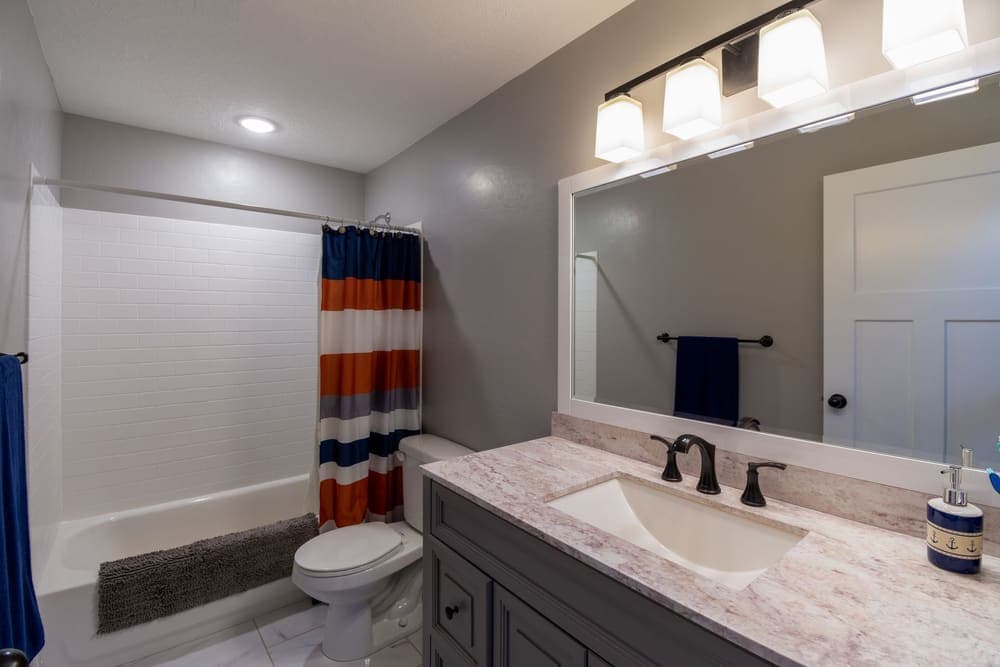
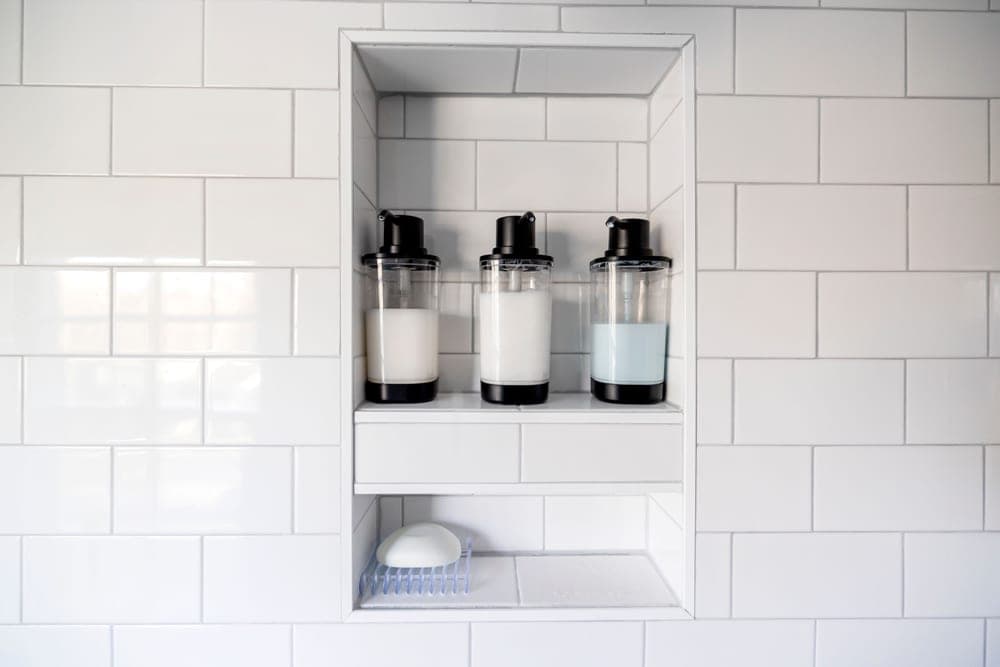
The two rooms where fit is decided by plumbing you cannot move, and where adhesive is asked to do its hardest job.
These are the two rooms where the constraints come from the building rather than from your taste. Under a sink, the drain trap sits wherever the plumber put it, and every organizer either clears it or does not. In a shower, heat and standing water attack the one mounting method renters rely on most, which is why the water-resistant adhesive range exists as a separate product line.
So the numbers that matter here are dimensions rather than loads. An expandable under-sink rack adjusts from 15.75 to 25 inches wide with four shelf height levels; another runs 17 to 25 inches at 15 inches tall. Whether either fits is decided by three measurements taken with a tape measure in about a minute -- under-sink clearance is that measurement, step by step.
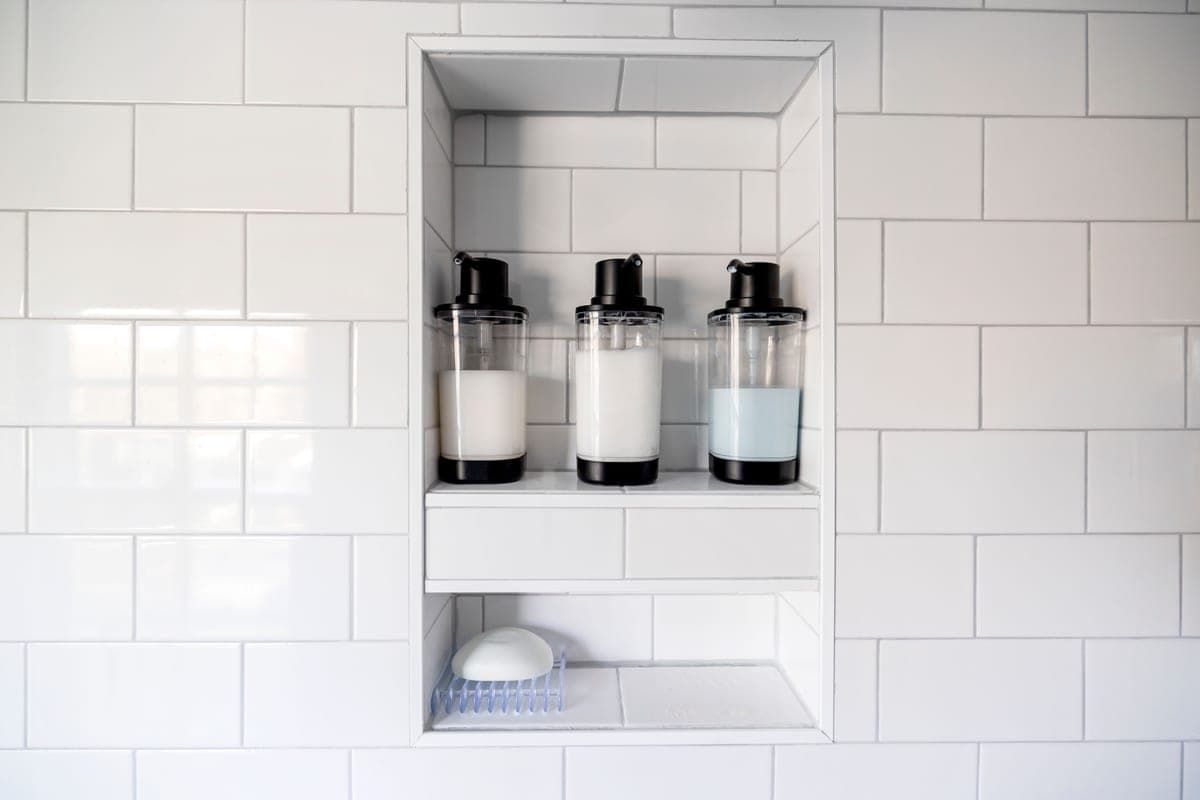
For the shower, the honest hierarchy is: a freestanding caddy that stands on the floor publishes 13.2 lb and cannot fail; a floor-to-ceiling tension pole touches nothing and fits ceilings from 6 to 9 feet; adhesive is last, and only the water-resistant range. Ranked picks are in no-drill shower caddies, and the reason adhesive struggles is in why adhesive fails in bathrooms.
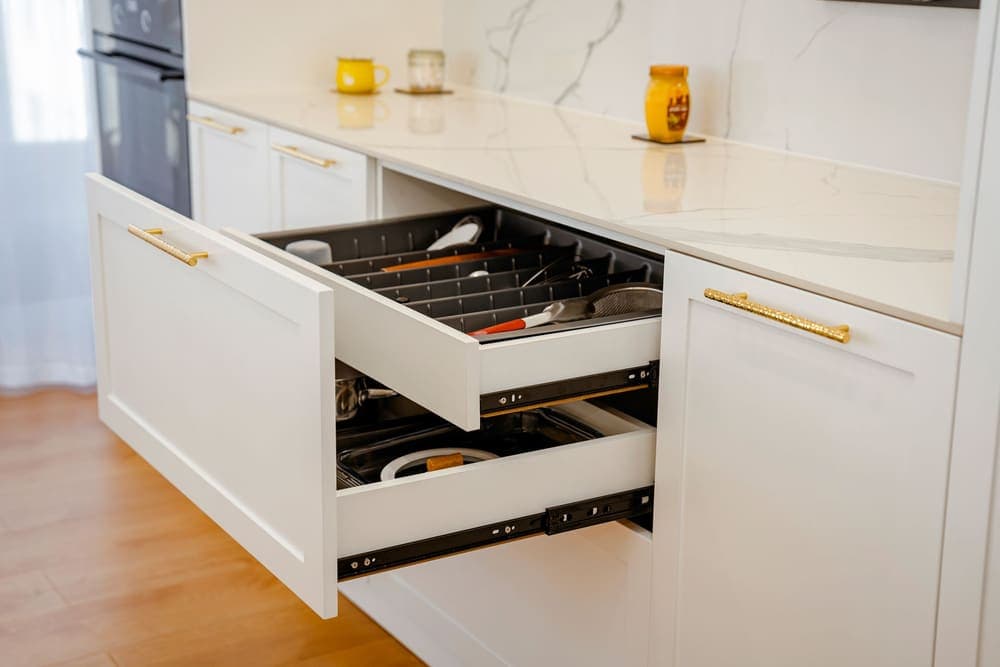
Drawer trays, dividers and modular sets ranked on published fit figures -- including the interior height requirement only one maker prints -- with no screws in the drawer.
Top pick: Joseph Joseph DrawerStore Expanding Cutlery Organizer (85166)
Vanity and makeup organizers ranked on published footprint -- 5.5 to 9.4 inches deep, 1.25 to 17.3 inches tall -- plus which listings publish their dimensions in the copy and which bury them.
Top pick: StorBin 5-Tier Makeup and Skincare Organizer (2105)
A no-fixings kitchen plan: what goes inside each cabinet type, and what to avoid.
How to choose in this category
Under the sink: measure three things
The opening width (the cabinet door frame, not the cabinet -- the frame is usually narrower), the internal height from the cabinet floor to the underside of the sink, and the position of the trap: how far in from each side and how high off the floor. A two-tier rack needs one clear side; a trap sitting dead center and low pushes you toward a U-shaped single-tier organizer instead. Full method in under-sink clearance, and the ranked racks in best under-sink organizers.
In the shower: pick the mounting method first
Shower storage by mounting method
Method
Published figure
Fails when
Freestanding caddy
13.2 lb (short Yamazaki Tower model)
The stall floor is too small to give it space
Floor-to-ceiling tension pole
Fits 6-9 ft ceilings; no shelf load published
The ceiling is sloped, vaulted or out of range
Water-resistant adhesive caddy
7.5 lb on one listing, 6.5 lb on another
The wall is textured, or never fully dries
Hanging from the shower rod
Rod-dependent -- one shower rod we cover publishes 7.5 lb total
A wet liner plus a loaded caddy exceeds the rod's rating
What these numbers assume: Manufacturer and retailer figures for the specific products cited on the pages below. Note the two genuine gaps: simplehuman publishes no per-shelf weight capacity for its tension caddy, and the same adhesive corner caddy is listed at two different ratings by two retailers. Both are stated rather than smoothed over.
In the kitchen: the cabinets are not yours
Renter kitchen storage lives inside cabinets and drawers rather than on their doors, for the simple reason that anything screwed to a cabinet door is a hole in the landlord's joinery. Renter-friendly kitchen cabinet organization works through what fits inside without a single fixing, best kitchen cabinet organizers ranks the risers, under-shelf baskets and over-door baskets that go in without a screw -- published loads run from 4.4 lb to 30 lb for products that look alike -- and no-drill bathroom shelves covers the same logic in the smaller room. The first job in either is lining the shelves, and in a rental the winner is often the liner with no adhesive at all -- best adhesive shelf liners compares the three on published roll size and removal claim, and shelf liner vs contact paper settles the question people actually ask in the aisle -- which of the two comes off a rental shelf without taking the finish with it.
In the bathroom, the largest piece of unused space is the wall above the toilet, and the category built for it hides a problem: most freestanding units ship with an anti-tip kit the maker tells you to fix to the wall. Best over-the-toilet storage ranks the tension-mounted alternatives that need no fixing at all against the freestanding ones that publish more capacity.
Towels are the heaviest wet load in the room, and there are four ways to hang one without a drill -- over the door, on the hinges, on water-resistant adhesive, or on the floor. Best no-drill towel racks ranks them on what can let go and what each maker actually publishes.
One cross-category note: if you are relying on adhesive anywhere in these two rooms, read the surface matrix first. Tile and glass are the friendliest surfaces on the whole site for adhesive; a textured painted bathroom wall is one of the worst.
On the counter rather than in the cupboards: best dish drying racks compares five on published footprint and how each one drains, because not one maker in that category publishes how many plates its rack holds.
Inside the drawers, the fit question is different and the answer is a measurement most people never take: best drawer organizers ranks six trays, dividers and modular sets on published size and non-slip figures, starting with the interior height a drawer needs before a tray will let it close.
The shower rod is the one tension product that gets wet and gets pulled every day: best tension shower curtain rods ranks six on span, grip and corrosion -- and finds that only one maker in the whole category publishes a load figure at all.
For the twenty-odd small bottles that defeat every cabinet, best spice rack organizers ranks five racks on published capacity in jars and on the tier depth that decides whether your spice jars actually sit on the shelf.
And the bathroom counter, which in a rental is usually a strip rather than a vanity: best bathroom counter organizers ranks six on published footprint -- 5.5 to 9.4 inches deep and 1.25 to 17.3 tall -- and on which listings print those figures in their own copy rather than burying them.