Work outward from the constraint, not from the product. In practice that means asking three questions in order, and each one eliminates a whole category.
What does the wall allow?
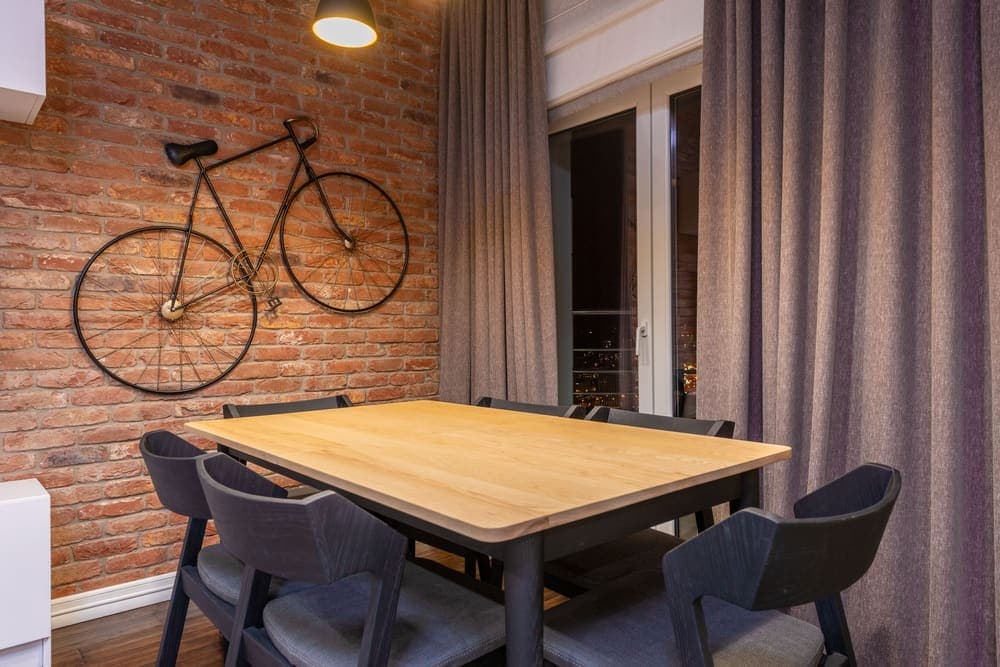
Smooth, cured, painted drywall is the friendly case and opens up the whole damage-free hanging category. Textured paint, wallpaper and brick close it entirely -- not because adhesive is weak on them but because the manufacturer publishes no rating for them at all. If that is your situation, skip straight to over-the-door and freestanding shelving, which do not care what your walls are made of.
What is the load, loaded?
Weigh the object in the state it will actually live in -- the bag with the laptop in it, the towel wet, the shelf with books on it. Then compare that against published ratings rather than against how sturdy something looks. A very large share of renter storage failures are a 3 lb hook holding a 6 lb bag, and the hook was never the problem.
What comes off cleanly?
Reversibility is the criterion this site treats as first-class, because it is a money question. Tension and freestanding systems are perfectly reversible: nothing is bonded to anything. Over-the-door hardware lifts off. Adhesive is reversible on the right surface, removed the right way, and risky on the wrong one. Fasteners are reversible in the sense that a hole can be filled -- which is a repair, not a removal. Our move-out removal checklist is the order to take it all down in, and it is worth reading at move-in rather than move-out.
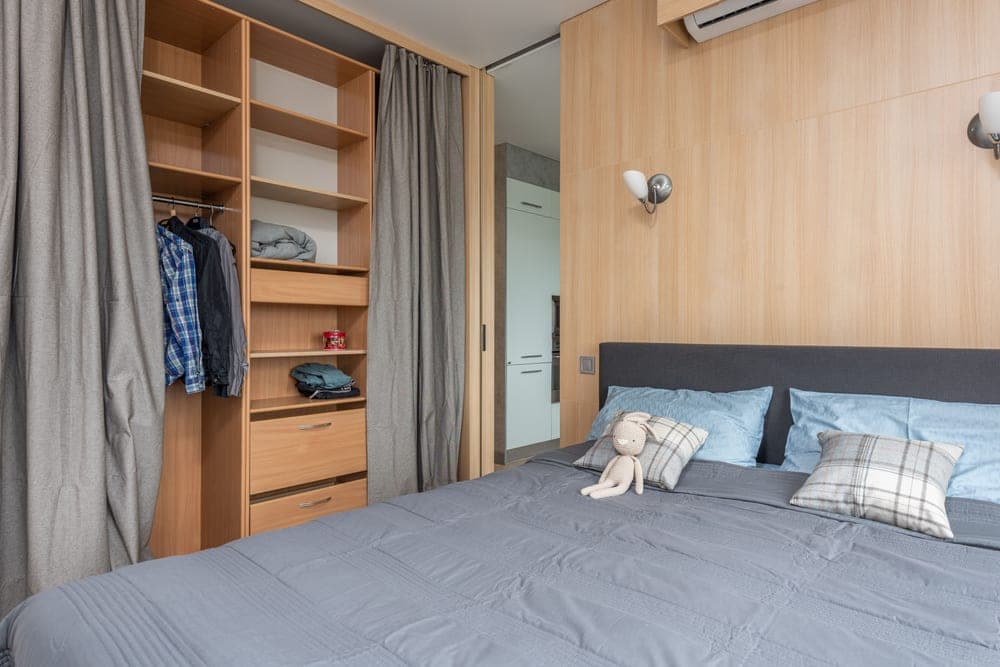
Two dwelling-shaped versions of the plan sit alongside the room-by-room ones: dorm storage that survives move-out, where the walls may be painted cinderblock and the lease runs eight months, and studio apartment setup, where the problem is dividing one room before storing anything in it. And one object gets a page of its own, because almost every product sold for it needs a stud and a drill: renter-friendly bike storage, ranked on published per-bike load from 30 lb to 75 lb. And when the problem is not storing things but separating them, renter-friendly room dividers covers the four ways to split a room with no fixings at all.
From here, the five product hubs each answer one room-shaped version of the same question: hanging for walls, shelving for storage that has to bear weight, windows for curtains and blinds, closets and doors for zero-wall-contact storage, and kitchen and bath for the two rooms where plumbing and humidity make their own rules.
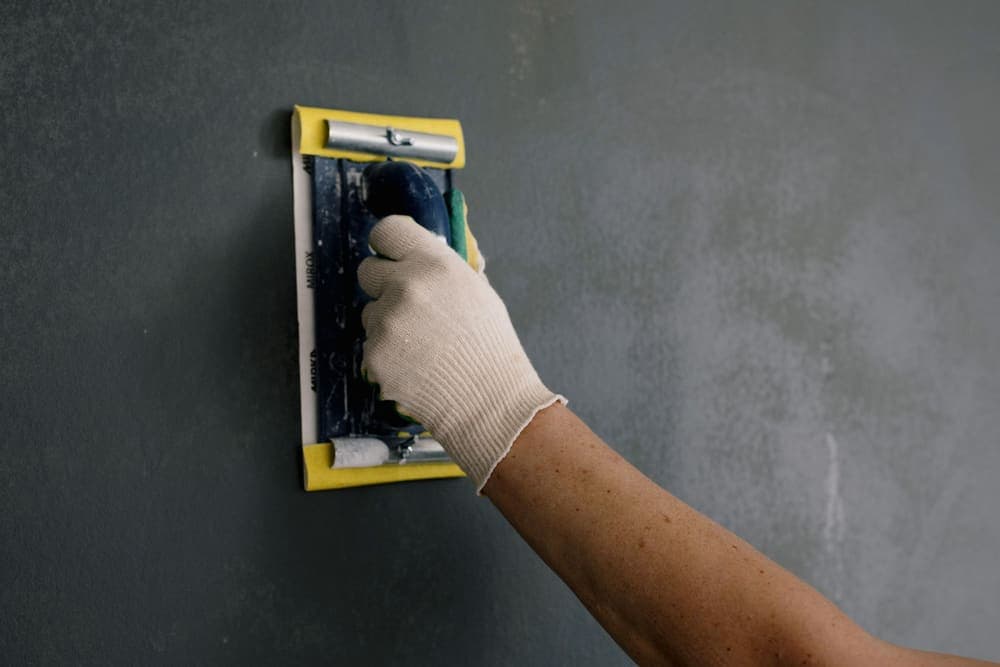
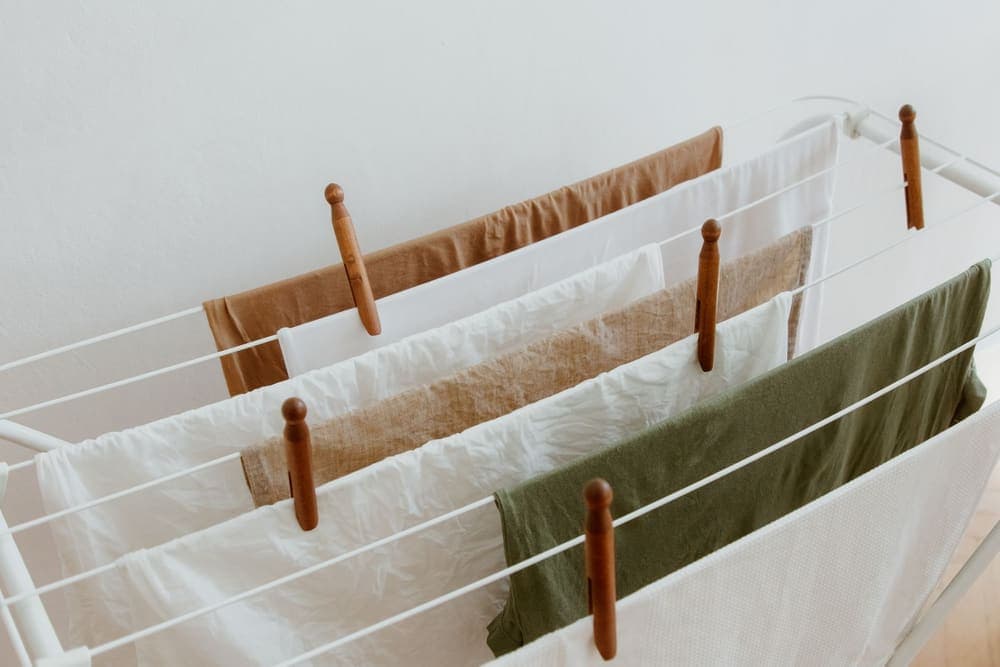
Two practical pages sit at either end of a tenancy. With no dryer and no line, the laundry problem is solved by a freestanding drying rack -- published capacities run to 60 lb and 46 linear feet of drying space. And at the end, wall repair for move-out covers the fillers that undo the holes, including one that goes on pink and turns white when it is dry.
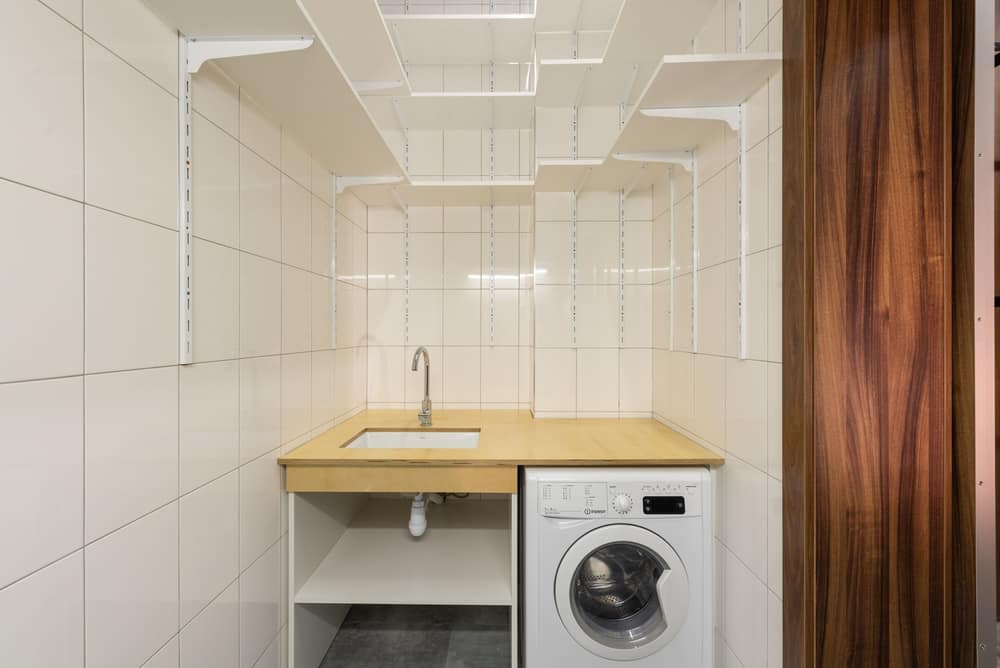
The room the machine lives in gets its own page: best laundry room storage ranks six no-fixing options on published fit -- gap carts from 4.75 to 7.1 inches wide, and the one over-washer frame that publishes the 28.7 in opening its machines have to fit through -- plus the anti-tip bracket most of those frames expect you to put on the wall.
And the awkward object that comes with that machine: where to put an ironing board -- over-door holders compared on the three figures only one maker publishes (a 1 3/8 in door maximum, a 0.08 in door gap and 66 lb), plus the tabletop board that removes the problem rather than hanging it on a door.