Windows · Guide
How to Hang Curtains Without Drilling
Ten minutes, one tape measure, and a decision that depends entirely on what your window trim is made of.
By Scooter M. · Published · How we pick
Disclosure · We earn a commission on purchases made through the Amazon links on this page, at no extra cost to you. These picks come from published specifications, not from hands-on use. How this site is funded.
The short answer
- Look at the window trim. Wooden casing 1/2 to 1 inch wide means brackets are available -- the strongest option, 20 lb published.
- No trim, or the wrong material? Use a tension rod inside the reveal, and check its published load against your curtain weight.
- Weigh the curtains. Both panels, plus rings. Lined blackout fabric is several times a sheer.
- Measure the span. Trim to trim for brackets; inside the reveal for tension.
- Fit, level, load, then check it again tomorrow.
Method 1: brackets on wooden trim
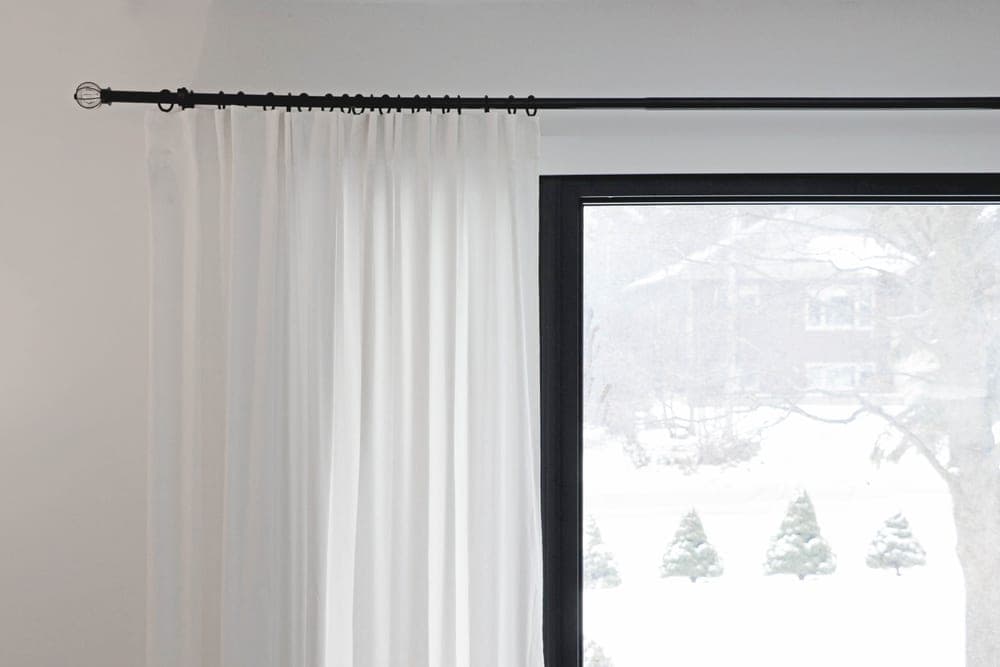
This is the higher-capacity route and the one that lets the curtain overhang the window, which is what actually blocks light at the edges.
- Check the trim. It must be wooden casing, at least 1/2 inch wide and no more than 1 inch. The manufacturer specifically excludes hardwoods such as oak, plus PVC, crown molding, MDF and metal trim. If yours is one of those, go to method 2.
- Position a bracket at the top corner of the window and tap it in with a hammer, per the manufacturer's instruction. Repeat on the other side.
- Add a center support if the window is over about 30 inches wide. The maker recommends it to prevent sagging; singles publish 10 lb and doubles 20 lb.
- Choose a rod that spans trim to trim with enough left for finials, and sit it in the brackets.
- Hang the curtains and stand back. Brackets project 3 inches from the trim, so the curtain clears a window handle and hangs outside the glass.
Method 2: a tension rod inside the reveal
- Measure the inside width at the height the rod will sit, at both ends, and use the smaller figure. Details in tension rod sizing.
- Pick a rod whose range brackets that number comfortably, not one that just reaches it, and check its published load against your weighed curtains -- the load table is here.
- Wipe both contact surfaces clean and dry. Dust reduces friction, and friction is the entire mechanism.
- Thread the curtains on first. Obvious, and the step everyone does second.
- Set the rod slightly long, compress it into place, level it, and check both ends are seated flat rather than at an angle.
- Check it again the next day. Tension rods creep before they fall. A rod that has moved in 24 hours will keep moving.
Method 3: skip the curtain
A curtain is not always the right answer to a bare window. A no-tools shade trims to width at home and mounts inside the reveal with no hardware at all, and one range publishes both a trim-to-fit range per width and a 1-1/4 inch minimum mount depth -- best no-drill blinds. For a bedroom, best no-drill blackout blinds covers why a shade and a curtain together beat either on its own.
The details that make it look deliberate
- Height: mounting the rod above the window opening rather than at it makes the window read as taller. Brackets allow this; tension rods, by definition, do not.
- Width: a rod that extends past the frame lets the curtains stack off the glass when open, which gains you daylight.
- Fullness: panels that only just meet in the middle look thin. This is a fabric decision rather than a hardware one, but it is the difference people notice.
- Weight: heavier fabric hangs better and needs a higher-rated rod. The two constraints pull against each other and the published figure is the referee.
Taking it down
Brackets: remove the rod and curtains, then lift the bracket up and off -- the manufacturer describes them as reusable. The pin marks they leave sit in the top edge of the casing. Tension rods: release and lift out, and expect a possible burnished ring where the rubber feet have been compressed against paint, which usually wipes away. Both are on the move-out removal checklist.
What to buy for this
Picked from the same registry as our roundups, on published specification. Nothing here has been tested by us, and we say so on every page.
Kwik-Hang Single Curtain Rod Bracket
Kwik-Hang · Best for wooden window trim, full-weight drapes
9.4
out of 10
20 lb published, and it holds by being tapped into the top of a wooden window casing -- not by sticking to the wall. The highest damage-free curtain figure on this site.
| Specification | Published figure | Source |
|---|---|---|
| Rated load | Up to 20 lb | Kwik-Hang published FAQ (manufacturer) |
| Trim it fits | Window trim at least 1/2 in wide, 1 in maximum | Kwik-Hang published FAQ (manufacturer) |
| Trim it does NOT fit | Hardwoods such as oak, PVC, crown molding, MDF, metal trim | Kwik-Hang published FAQ (manufacturer) |
| Projection | 3 in when installed | Kwik-Hang single bracket product page (manufacturer) |
| Installation | Positioned at the top corner of the window and tapped in with a hammer | Kwik-Hang published FAQ (manufacturer) |
What the specification gets you
- 20 lb is a real drapery figure -- blackout curtains and a metal rod, not just sheers
- The manufacturer publishes both what it fits and what it does not, which is rarer than it should be
- Removal is a lift, and the marks it leaves are on the top edge of the trim rather than the face of the wall
What it does not cover
- Needs wooden trim between 1/2 and 1 inch. A window with no casing, or a metal or MDF one, is simply out of scope
- It does put small pin marks into the trim -- damage-free here means no wall holes and no patching, not literally no mark
Coming off the wall
Manufacturer's own instruction: take off the rod and curtains, then lift the bracket up to disassemble. Reusable. It leaves the pin marks it made in the top edge of the casing, where the curtain hides them.
Skip this if
Skip this if your trim is MDF, PVC, metal, oak, or absent. The manufacturer says so itself, and a bracket that will not seat is a bracket that drops your curtains.
- Published load
- 10.0
- Fit range
- 6.5
- Reversibility
- 8.5
- Documentation
- 10.0
- Price-to-capability
- 9.0
#ad Prices change; we show one only when our feed has a live figure. How we are funded
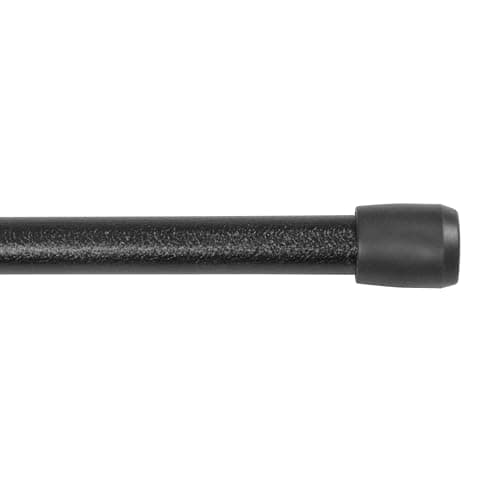
Kenney Strafford Spring Tension Rod (28-48 in)
Kenney · Best for inside-mount curtains on a 28-48 in opening
9.0
out of 10
22 lb published on a spring tension rod is an outlier figure, and it is the reason to read ratings per model rather than assume tension rods are all the same.
| Specification | Published figure | Source |
|---|---|---|
| Rated load | 22 lb maximum weight | Kenney Strafford product listing (Lowe's) |
| Span | Adjustable 28 to 48 in | Kenney Strafford product listing (Lowe's) |
What the specification gets you
- 22 lb published is far above the 2 to 7 lb figures on the light twist-and-fit rods
- Inside mount means no bracket, no trim requirement and no contact with the wall face at all
- The span range covers the standard bedroom window without a cut
What it does not cover
- A tension rod holds by friction against two surfaces, so a painted reveal that is slick or textured changes the outcome and no rating covers that
- Inside mount only -- it cannot hang wider than the opening, which is how you lose light control at the edges
Coming off the wall
Twist to shorten and lift out. On a painted reveal, the rubber end caps can leave a burnished ring where they have been under compression -- it usually wipes off.
Skip this if
Skip this if you need the curtain to overhang the window opening. Tension lives inside the reveal by definition; overhang needs a bracket.
- Published load
- 10.0
- Fit range
- 7.5
- Reversibility
- 9.5
- Documentation
- 8.0
- Price-to-capability
- 9.0
Questions people actually ask
How do you hang curtains without drilling holes?
Either with brackets that tap into wooden window trim -- 20 lb published, and the curtain hangs outside the opening -- or with a tension rod inside the reveal, which needs no trim but keeps the curtain within the window's width.
Can I use adhesive hooks to hang a curtain rod?
It is the common improvisation and the weakest option: the largest adhesive hook publishes 7.5 lb, and a curtain rod loads a hook sideways rather than straight down, which is not what that rating describes.
How high should the rod go?
Above the window opening rather than level with it, if your method allows -- it makes the window read taller. Bracket systems allow this; a tension rod is inside the opening by definition.
Why do my tension rods keep slipping?
Dusty or glossy contact surfaces, a rod set at the extreme of its adjustment range, or a curtain heavier than the published figure. Clean the surfaces, choose a range that brackets your opening comfortably, and check the load rating for the specific model.
Do no-drill curtain brackets damage the trim?
They tap in and lift off, and the manufacturer describes them as removable and reusable. They leave the small pin marks they made in the top edge of the casing, which the curtain then hides.