Hanging · Comparison
Sticky Tack vs Poster Strips
The question everyone asks is how much weight sticky tack holds. Almost nobody who sells it will tell you -- and the two brands that do publish numbers a foot apart.
By Scooter M. · Published · How we pick

Disclosure · We earn a commission on purchases made through the Amazon links on this page, at no extra cost to you. These picks come from published specifications, not from hands-on use. How this site is funded.
Quick picks
Ranked on published specification, not on hands-on use. Tap a row for the full write-up.
| # | Product | Best for | Score | Price |
|---|---|---|---|---|
| 1 | 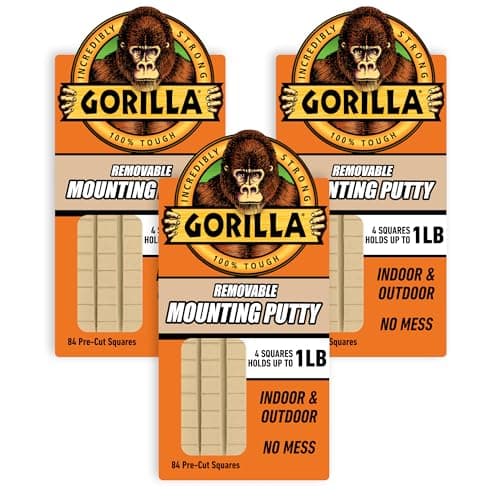 Gorilla Removable Mounting Putty, 84 Pre-Cut Squares The highest published figure, 2 lb | Posters, prints and anything you want to reposition | 9.0out of 10 | $10.68 · View on Amazon #ad Price as of September 21, 2026. How we are funded |
| 2 | 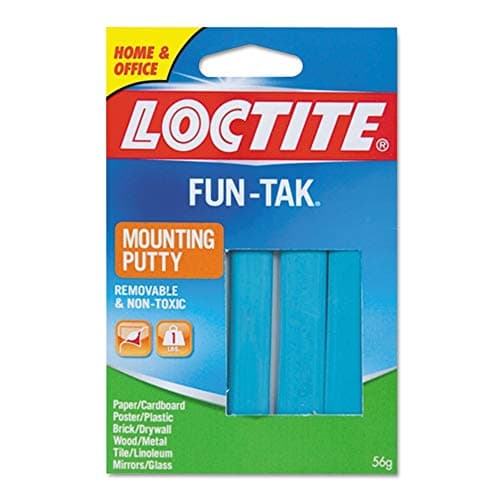 Loctite Fun-Tak Mounting Putty, 2 oz Rated for brick and cinderblock | Dorm brick and painted cinderblock, where strips are not rated | 8.6out of 10 | $2.33 · View on Amazon #ad Price as of September 21, 2026. How we are funded |
| 3 | 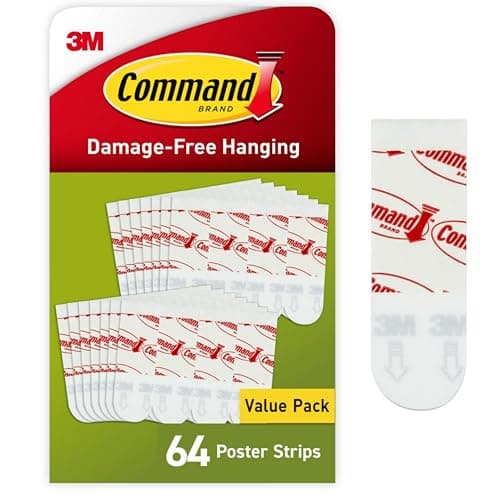 Command Poster Strips, 64 Strips (PH024-64NA) Holds a poster flat | Posters that must sit flat and stay put | 8.4out of 10 | $10.99 · View on Amazon #ad Price as of September 21, 2026. How we are funded |
| 4 | 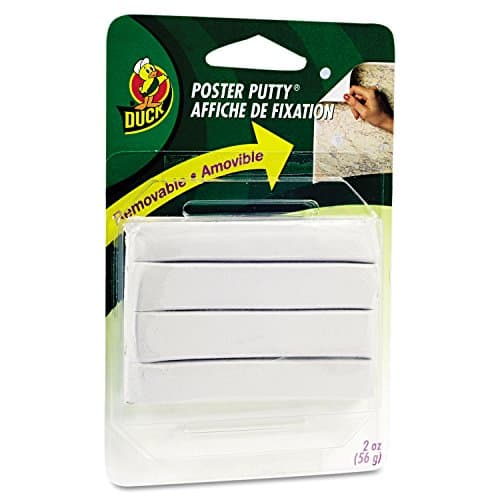 Duck Brand Reusable Poster Putty, 2 oz 1 lb, and publishes its exclusions | Light posters and notes on sound, cured paint | 8.2out of 10 | $4.70 · View on Amazon #ad Price as of September 21, 2026. How we are funded |
| 5 | 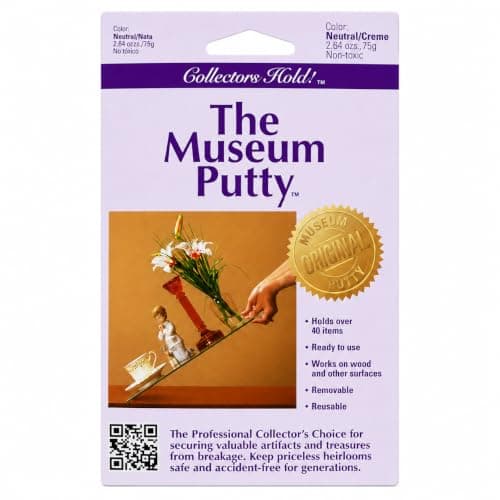 Quakehold! Museum Putty, 2.64 oz (99111) A different job entirely | Stopping a vase or frame walking off a shelf | 7.5out of 10 | $4.99 · View on Amazon #ad Price as of September 21, 2026. How we are funded |
"How much weight can sticky tack hold" is one of the most-asked questions in damage-free hanging, and the answer is harder to find than it should be. Most brands that sell mounting putty publish no weight figure at all.
Of the five products on this page, exactly two put a number on it: Gorilla says up to 2 lb. Duck says up to 1 lb. Loctite's Fun-Tak -- the blue strip most people picture when they say sticky tack -- publishes none. Neither does Scotch. Command's poster strips publish a poster count rather than a weight.
So the useful comparison is not putty versus strips on strength, because only one side has numbers. It is this: putty is rated for surfaces that adhesive will not touch, and strips hold flat where putty sags. That decides it more often than a pound figure would.
| Product | Published weight | Published surfaces | Reusable? |
|---|---|---|---|
| Gorilla Removable Mounting Putty | Up to 2 lb | Paper, painted walls, wood, tile, metal, plastic, glass; indoor and temporary outdoor | Yes, repositionable |
| Loctite Fun-Tak | Not published | Paper, wood, tile, linoleum, cinderblock, brick, metal, plastic, mirrors, glass | Yes, stated not to dry out |
| Command Poster Strips | Not published; 64 strips stated to hang up to 32 posters | Painted walls, finished wood, painted cinder block, laminate, glass, metal, tile | No -- new strips each time |
| Duck Poster Putty | Up to 1 lb | Wood, tile, linoleum, cinder block, brick, metal, plastic, porcelain, mirrors, glass | Yes |
| Quakehold! Museum Putty | Not published | Wood, glass, marble -- for objects on shelves, not walls | Yes |
The short answer, with the numbers that exist
Treat putty as a one-pound product. Gorilla publishes 2 lb and Duck publishes 1 lb for what are, functionally, the same thing. When two makers of the same product disagree by a factor of two, the lower number is the one to plan around -- particularly since neither publishes the conditions behind it, the way the adhesive makers publish theirs in the published weight limits table.
In practice that covers paper posters, unframed prints, postcards, photos and light card. It does not cover anything with glass in it, and it does not cover a frame -- for those, the figures worth reading are the adhesive strip ratings, which run to 20 lb for a set and are published with their conditions attached.
How these are ranked
A published figure counts first: a maker willing to print a number has taken a position, and two here have. Then published surfaces, because that is what decides whether the product works on your wall at all. Then what it leaves behind, which in a rental is the whole point. Then reusability and price. The full method is here.
The surface split, and why it matters in a dorm
This is the real reason to keep putty in a drawer. Read the two surface lists side by side and one difference jumps out: Loctite and Duck both name brick and cinderblock.
The adhesive range is much more restricted. Command's own guidance across its products names smooth surfaces -- painted walls, finished wood, laminate, glass, metal, tile, and painted cinder block on some lines -- and explicitly rules out textured walls, wallpaper, rough surfaces and bare brick. That is set out in full in what surfaces hold an adhesive hook.
Which means: in a dorm room with painted block walls, or an apartment with an exposed brick wall, putty is rated where most adhesive is not. It is the only damage-free product on this site whose published surface list includes bare brick. For a student hanging paper posters on block, that settles it -- the dorm playbook has the rest of that room.
Where strips win: flat
Putty holds a poster at the points you put it. Between those points the paper bows, the corners curl, and in a warm room the whole sheet creeps downward over a few weeks because putty is tacky rather than structural -- it flows slowly under load.
Adhesive poster strips hold the sheet against the wall along their length, so the poster sits flat and stays where it was put. The trade is that they are single-use, they need the surface cleaned with rubbing alcohol first, and they carry conditions: the listing states an indoor temperature between 50F and 105F, seven days after painting, and not for hanging valuable items.
The honest split: putty for things you will move, strips for things that should look properly hung. A poster you rotate every term is a putty job. A print you want flat for a year is a strips job.
Getting it off without taking the wall
Both products fail the same way at removal, and both failures are avoidable.
Putty: do not pull it straight off. Warm it between your fingers, then roll or twist it away from one corner so it releases progressively. Putty that has sat for a year on flat matte paint can leave a slight sheen where the oil in it has soaked in -- which is an argument for the neutral and white putties here over the blue one on a white rental wall.
Strips: pull the tab slowly straight down the wall, never outward. The full procedure, and the five recoveries for when it goes wrong, are in how to remove adhesive hooks without taking paint.
What we would skip
Museum putty, for posters. It sits on the same shelf and it is a different product: the maker describes it as securing vases, figurines and frames on shelves and furniture to stop them sliding and tipping. It is genuinely good at that -- it is on this page ranked last so you buy it deliberately rather than by accident.
Putty on wallpaper. Duck excludes flocked and loose wallpaper outright. On any papered wall the risk is not that the poster falls; it is that the paper comes with it.
Either product for anything with glass in it. Every published figure in this category tops out at 2 lb. A small framed print is already heavier. That job belongs to damage-free picture hooks, where the published figures run from 5 lb to 20 lb and come with a stated method.
Where this sits in the damage-free range
Putty is the bottom rung of a ladder this site has already mapped. Above it, adhesive hooks publish 0.5 lb to 7.5 lb with conditions; picture hanging strips publish 15 lb to 20 lb for a set on flat-backed objects; and on a steel surface, magnetic hooks publish far more than any of them. Every rung has a published number except this one.
That is not a reason to avoid putty. It is a reason to use it for what it is: the cheapest, most reversible, most surface-tolerant way to put paper on a wall you do not own.
The picks in full
Every figure below is published by the manufacturer or the retailer listing named beside it. Where a figure is not published, the row says so rather than carrying an estimate.
#1 · The highest published figure, 2 lb
Gorilla Removable Mounting Putty, 84 Pre-Cut Squares
Gorilla · Best for posters, prints and anything you want to reposition
9.0
out of 10
The highest published figure of any putty we could source, and one of only two that publish a figure at all. Two pounds is the honest ceiling for this whole category.
| Specification | Published figure | Source |
|---|---|---|
| Rated load | Securely holds lightweight items up to 2 lb | Gorilla product listing |
| Surfaces | Paper, painted walls, wood, tile, metal, posters, plastic and glass; stated for indoor and temporary outdoor use | Gorilla product listing |
| Format | 84 pre-cut squares, no kneading required; neutral color | Gorilla product listing |
| Removal | Solvent-free, stated low-residue, described as coming off clean | Gorilla product listing |
What the specification gets you
- 2 lb published, which is double the only other figure in the category
- Pre-cut squares mean you use the same amount every time, which is the main variable in how well putty holds
- Neutral color rather than blue, so a smear left behind is far less visible on a white rental wall
What it does not cover
- 2 lb is the ceiling, not a working load -- a framed A2 print is already over it
- Putty holds by tack, not by adhesive strength, so it creeps downward in a warm room
- "Low-residue" is not no-residue; on flat matte paint it can leave a slight sheen where it sat
Coming off the wall
Roll it off rather than pulling it. Putty that has been on a wall for a year takes paint if you snatch it -- warm it between your fingers first and peel slowly from one corner.
Skip this if
Skip this if the thing you are hanging has glass in it. Every published figure in this category is for paper and light card.
- Published load
- 9.0
- Surface range
- 8.5
- Reversibility
- 8.5
- Documentation
- 9.0
- Price-to-capability
- 8.5
#ad Price as of September 21, 2026. How we are funded
#2 · Rated for brick and cinderblock
Loctite Fun-Tak Mounting Putty, 2 oz
Loctite · Best for dorm brick and painted cinderblock, where strips are not rated
8.6
out of 10
The putty everyone means when they say sticky tack. It publishes no weight figure at all -- but it does publish the surface list, and that list includes the two surfaces adhesive strips refuse.
| Specification | Published figure | Source |
|---|---|---|
| Rated load | Not published | Loctite product listing |
| Surfaces | Paper, wood, tile, linoleum, cinderblock, brick, metal, plastic, mirrors and glass | Loctite product listing |
| Reuse | Stated not to dry out, for multiple uses; non-toxic formula | Loctite product listing |
| Format | 2 oz strip, torn and kneaded by hand; blue | Loctite product listing |
What the specification gets you
- Cinderblock and brick are both on the published surface list, which is exactly where the adhesive range is unrated
- Cheapest thing on this page by a wide margin, and one strip does a wall of posters
- Kneadable rather than pre-cut, so you can use a bigger blob where a corner keeps lifting
What it does not cover
- No published weight figure, so you are working entirely on feel
- Blue putty on a white wall leaves a visible trace if any is left behind
- Hand-kneading means the amount varies corner to corner, which is usually why one corner drops
Coming off the wall
Twist and lift rather than pull straight out. The blue color is the catch: on a white wall, a trace left in the texture is visible in a way a neutral putty is not.
Skip this if
Skip this if the wall is freshly painted. Putty pulls uncured paint, and in a rental that is the repair you were trying to avoid.
- Published load
- 3.0
- Surface range
- 10.0
- Reversibility
- 8.0
- Documentation
- 6.5
- Price-to-capability
- 10.0
#ad Price as of September 21, 2026. How we are funded
#3 · Holds a poster flat
Command Poster Strips, 64 Strips (PH024-64NA)
Command · Best for posters that must sit flat and stay put
8.4
out of 10
The strip answer to the same job. It publishes no pound figure either -- it publishes a poster count, a temperature range and a list of surfaces, which between them tell you more than a number would.
| Specification | Published figure | Source |
|---|---|---|
| Rated load | Not published as a weight; the listing states 64 strips hang up to 32 posters or signs | Command PH024 product listing |
| Surfaces | Painted walls, finished wood, painted concrete cinder blocks, laminate, glass, metal and tiles | Command PH024 product listing |
| Conditions | Indoor temperature must be between 50F and 105F; wait seven days after painting; clean the surface with rubbing alcohol first | Command PH024 product listing |
| Warnings | The listing states not to use them for hanging valuable items | Command PH024 product listing |
What the specification gets you
- Holds a poster flat to the wall rather than letting the corners bow, which putty cannot do
- Painted cinder block is on the published surface list, so it covers dorm walls as well as the putties do
- A published removal method, which no putty on this page has
What it does not cover
- No weight figure at all -- the 32-poster claim assumes paper posters, and nothing on the listing says what a poster weighs
- Conditions attached: seven days after painting, 50F to 105F, alcohol-cleaned surface. Miss one and it lets go
- One-use. Every repositioning costs another pair of strips, where putty is reusable
Coming off the wall
Stretch-release: pull the tab slowly straight down the wall, never outward. On cured paint that takes nothing with it, which is the entire reason this product exists.
Skip this if
Skip these if you reposition things often, or if the room gets colder than 50F -- a garage or an unheated sunroom is outside the published range.
- Published load
- 4.0
- Surface range
- 9.0
- Reversibility
- 9.5
- Documentation
- 9.0
- Price-to-capability
- 7.5
#ad Price as of September 21, 2026. How we are funded
#4 · 1 lb, and publishes its exclusions
Duck Brand Reusable Poster Putty, 2 oz
Duck · Best for light posters and notes on sound, cured paint
8.2
out of 10
Publishes a 1 lb figure and, more usefully, publishes what it will not stick to. The exclusions are the part of this listing worth reading.
| Specification | Published figure | Source |
|---|---|---|
| Rated load | Temporary hanging and mounting up to 1 lb | Duck product listing |
| Surfaces | Most clean, dry porous and non-porous surfaces: wood, tile, linoleum, cinder block, brick, metal, plastic, porcelain, mirrors, glass | Duck product listing |
| Not recommended for | Flocked or loose wallpaper, and peeling or fresh paint | Duck product listing |
| Format | 2 oz, white, removable and reusable | Duck product listing |
What the specification gets you
- Publishes both a weight figure and an exclusion list, which is more documentation than most of this category manages
- White rather than blue -- the right choice for a rental wall
- Names fresh paint as a surface to avoid, which is the single most common way people damage a rented wall
What it does not cover
- 1 lb is half the Gorilla figure for a similar product
- Hand-torn, so the amount per corner is inconsistent
- Wallpaper is excluded, and a lot of older rentals have exactly that
Coming off the wall
Peel slowly. White putty is far more forgiving than blue on a white wall, because the trace it leaves does not announce itself.
Skip this if
Skip this if your walls are papered. The maker excludes flocked and loose wallpaper, and on any wallpaper the risk is not the holding, it is the peeling.
- Published load
- 7.0
- Surface range
- 8.5
- Reversibility
- 8.5
- Documentation
- 9.0
- Price-to-capability
- 9.0
#ad Price as of September 21, 2026. How we are funded
#5 · A different job entirely
Quakehold! Museum Putty, 2.64 oz (99111)
Quakehold! · Best for stopping a vase or frame walking off a shelf
7.5
out of 10
A different job that shares a shelf with this category: it stops things sliding and tipping on a surface rather than holding them on a wall. Bought for posters, it will disappoint.
| Specification | Published figure | Source |
|---|---|---|
| Rated load | Not published | Quakehold! product listing |
| Intended use | Securing antiques, collectibles, figurines, vases and picture frames on shelves and furniture; stated to reduce sliding and tipping | Quakehold! product listing |
| Surfaces | Many common surfaces including wood, glass and marble | Quakehold! product listing |
| Removal | Remove by gently twisting and lifting, stated to reposition without residue | Quakehold! product listing |
What the specification gets you
- The right product for the job it is actually for: stabilizing objects that a bumped shelf sends over
- Neutral cream color disappears under the base of an object
- A published removal method, and a gentle one
What it does not cover
- Not a wall-hanging product, whatever the shelf it sits on in the shop suggests
- No weight figure of any kind
- More expensive per ounce than the poster putties, for a smaller job
Coming off the wall
Twist and lift, exactly as the maker describes. On furniture rather than paint, this is the least risky removal on the page.
Skip this if
Skip this for posters. It is on this page to keep you from buying it for the wrong reason -- the wall job belongs to the four products above.
- Published load
- 3.0
- Surface range
- 7.5
- Reversibility
- 9.5
- Documentation
- 7.0
- Price-to-capability
- 7.0
#ad Price as of September 21, 2026. How we are funded
Questions people actually ask
How much weight can sticky tack hold?
Most brands publish no figure at all. Of the products we cover, Gorilla states up to 2 lb and Duck states up to 1 lb; Loctite's Fun-Tak and Scotch's mounting putty publish nothing. Treat putty as a one-pound product for paper posters and light card, and use a rated adhesive strip or hook for anything heavier.
Is sticky tack or are poster strips better?
Putty for things you will move and for surfaces adhesive is not rated for, including brick and cinderblock. Strips for anything that should sit flat and stay put, because putty lets the paper bow between contact points and creeps downward in a warm room.
Does sticky tack damage paint?
It can, in two ways. Pulled straight off it can lift paint, especially paint that is not fully cured -- Duck names fresh and peeling paint as surfaces it is not recommended for. Left for a long time on flat matte paint it can leave a slight sheen. Warm it, then roll it off from a corner rather than pulling.
Will sticky tack work on brick or cinderblock walls?
Yes, and this is where it beats adhesive. Both putties we cover name cinderblock and brick on their published surface lists, while the adhesive range is restricted to smooth surfaces and explicitly rules out rough and textured ones. On a painted block dorm wall, putty is the rated option.
Can you reuse mounting putty?
Yes -- reusability is the main practical advantage over strips. Loctite states its putty does not dry out and is good for multiple uses. Adhesive poster strips are single-use: repositioning costs another pair.
What is museum putty for?
Stopping objects sliding and tipping on a shelf, not hanging things on a wall. The maker describes it as securing antiques, collectibles, figurines and vases on shelves and furniture. It is a good product for that job and the wrong purchase for posters.
Can you hang a framed picture with sticky tack?
No. The highest published figure in this category is 2 lb and a small framed print is usually heavier, with the load concentrated at the top edge. Use picture hanging strips, which publish 15 lb to 20 lb for a set, or a rated picture hook.
Sources
- Gorilla Removable Mounting Putty -- holds lightweight items up to 2 lb, 84 pre-cut squares, published surface list (product listing)
- Loctite Fun-Tak Mounting Putty 2 oz -- surfaces including cinderblock and brick, stated not to dry out, no weight figure published (product listing)
- Command Poster Strips PH024 -- 64 strips stated to hang up to 32 posters, 50F to 105F, seven days after painting (product listing)
- Duck Brand Poster Putty 2 oz -- up to 1 lb, not recommended for flocked or loose wallpaper or peeling or fresh paint (product listing)
- Quakehold! Museum Putty 99111 -- for securing objects on shelves and furniture, no weight figure published (product listing)